Bocconi’s Summer School in Sustainability Transformation, ESG Finance and Energy Management

Three weeks in Milan to build the analytical toolkit that the next decade of business, policy, and finance will demand

Fabio Pellini – Co-Founder | April 3, 2026

The word sustainability has been repeated so often it has started to lose precision. But behind the terminology lies a set of concrete, urgent, and genuinely difficult problems. Problems that are already reshaping how companies are financed, how governments regulate industry, and how entire sectors are being forced to restructure. Bocconi University’s Summer School in Sustainability Transformation, ESG Finance and Energy Management is built for students who want to engage with those problems rigorously, not superficially.

This is not a course about corporate social responsibility communication. It is a course about systems, ecological, financial, and economic, and about what it actually takes to change them.
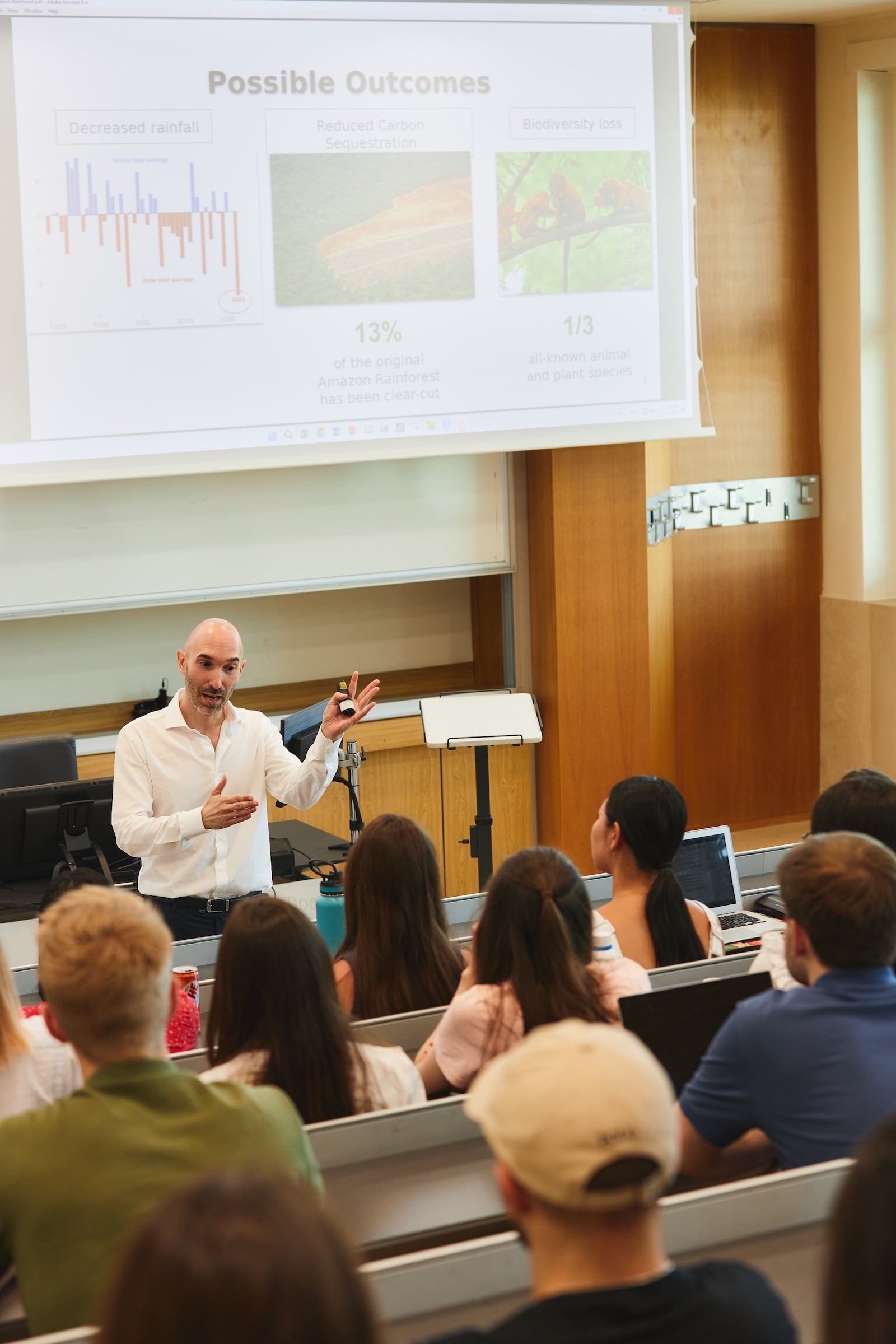

Table of Contents

Starting Where the Science Starts

The program opens with a direct confrontation with the physical reality of the Anthropocene: climate change, biodiversity loss, resource depletion, and the concept of planetary boundaries, the thresholds beyond which Earth’s systems begin to destabilize in ways that are difficult or impossible to reverse.

This is a deliberate choice. Understanding the financial and managerial dimensions of sustainability requires first understanding what is actually at stake ecologically. The course treats this not as background context but as foundational content, spending the first week building fluency in the science of Earth system change and its implications for economic and social organization.

From there, the program moves into decarbonization, the structural challenge of redesigning energy systems, supply chains, and industrial processes to eliminate their dependence on fossil fuels. This is where the course begins to bridge the gap between scientific understanding and economic strategy.

The Financial Architecture of Transition

A distinctive feature of this program is its serious engagement with finance. ESG investing, sustainable finance frameworks, and evolving corporate disclosure standards are not treated as optional extras or reputational tools, they are examined as mechanisms that are actively redirecting capital flows and redefining what constitutes business risk.

Students explore how environmental, social, and governance factors influence investment decision-making, how financial institutions are incorporating sustainability criteria into their processes, and how the regulatory landscape around corporate reporting is tightening across major markets. These are skills that matter in asset management, corporate treasury, consulting, and public policy alike.

Energy management receives its own dedicated focus within the program. As the energy transition accelerates, the ability to understand energy costs, efficiency frameworks, and the strategic implications of renewable adoption has become a core management competency, not a specialist niche.

Corporate Sustainability as Strategy, Not Compliance

The middle arc of the course addresses corporate sustainability directly: how organizations assess their own impact, set credible targets, engage stakeholders, and build sustainability into their core business model rather than bolting it on as a reporting exercise.

This is where the program connects the macro-level analysis of the first week to the ground-level decisions that managers actually face. Case studies and company presentations provide exposure to how real organizations are navigating these questions, with all the trade-offs and tensions that entails.

The final week synthesizes the program’s threads under the heading of sustainability transformation. The broader systemic shifts required across industries and economies, and the role that individuals in business, finance, and public institutions play in either accelerating or obstructing them.

Further infos

Practical Details

The program runs across three weeks in early-to-mid July, with morning and afternoon sessions on most days. It is held at Bocconi’s campus in Milan. No specific prerequisites are listed in the program documentation, making it accessible to students from a range of academic backgrounds: economics, management, political science, engineering, law, or environmental studies.

Who This Course Is For

The program is explicitly designed for students who expect to operate in a world where sustainability is not optional. That scope is intentionally broad: business, policy, research, and civil society are all named in the program’s own framing. What connects them is the expectation that understanding planetary boundaries, decarbonization pathways, ESG frameworks, and sustainability governance will be necessary working knowledge for anyone in a consequential professional role.

If your career is likely to touch corporate strategy, investment, energy, regulation, consulting, or any sector undergoing structural environmental pressure, which at this point covers most of the economy, this program gives you the conceptual vocabulary and analytical foundations to engage those questions seriously rather than superficially.

Interested in applying? You can find this program listed on our platform alongside other Bocconi Summer School courses. Application deadlines and program details are always available on wearefreemovers.