What a Room Full of Students Told Us About the Future of Study Abroad

Written by

There are conferences where you talk to industry professionals about what students want. And then there are the rare moments where you skip the middleman entirely and just ask the students directly. In these conversations, topics like free mover as a study abroad option often come up.

The ESN Lugano Integration Weekend in Emmetten was one of those moments. And what we heard in that room confirmed something we’ve believed for a long time, but had never seen quite so clearly in front of us.

Category —

How we got there

ESN Lugano, the Erasmus Student Network chapter based in Lugano, Switzerland, invited us to join their integration weekend as guests and workshop leaders. It was an honor to be included. ESN is deeply embedded in the world of student mobility across Europe, and getting the chance to speak directly with their community meant speaking with exactly the kind of students we think about every day: young, internationally minded, and figuring out what their next move looks like.

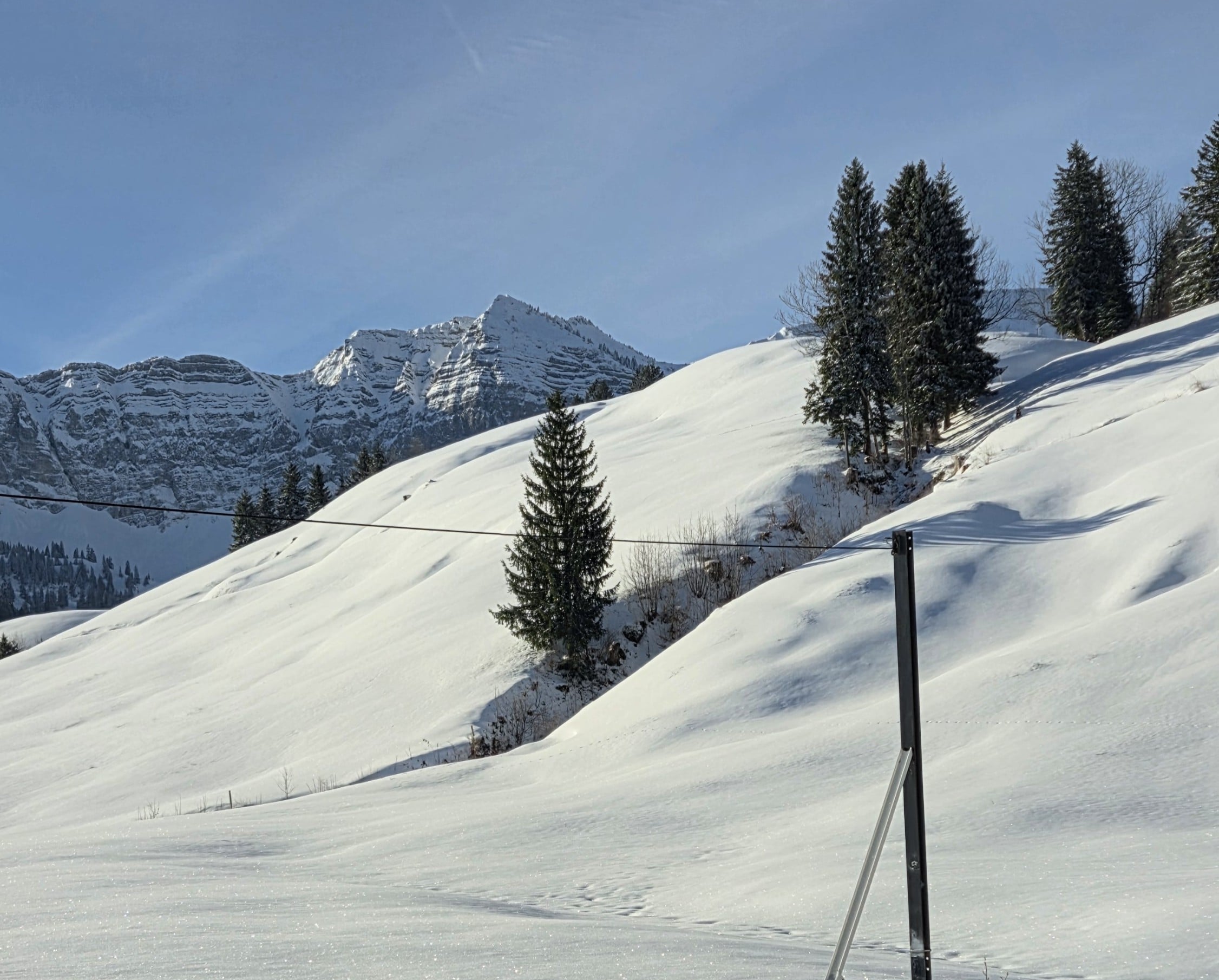
The weekend was held in Emmetten, a small town in the Swiss mountains that has a way of making everything feel a little more honest. There’s something about being away from the noise of a city that strips conversations down to what actually matters.

We came prepared with a workshop about study abroad: Erasmus vs Free Mover. But more than presenting, we came ready to listen.

The workshop

The session was built around a question that sits at the core of everything we do: what’s the difference between the Erasmus route and the free mover path, and why does it matter?

We walked students through both options, how Erasmus works, what it offers, what it limits, and then how the free mover model opens up a completely different world of possibilities. No partner lists to constrain you. No bilateral agreements dictating where you can and can’t go. Just a student, a destination they genuinely want, and a clear process to get there.

The conversation got going quickly. Students had opinions. They had questions. They had frustrations with systems they’d been trying to navigate on their own. That part didn’t surprise us.

What surprised us was the map.

Sticker after sticker, outside Europe

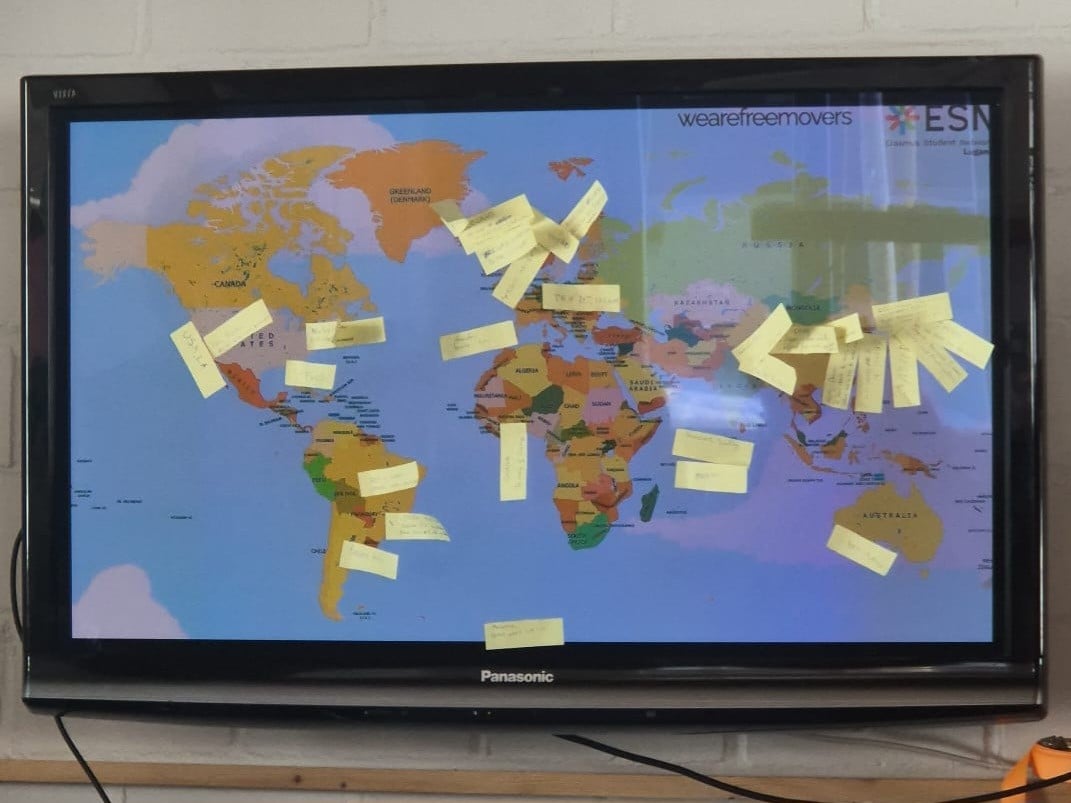
We ended the workshop with a simple activity. We pulled up a world map and gave each student a sticker. The instruction was straightforward: put it where you want to study abroad.

The stickers started landing. And they kept landing outside of Europe.

Asia. North America. Latin America. Oceania. The map filled up in a way that, if you’d run the same exercise five or six years ago, you almost certainly wouldn’t have seen. Back then, the gravitational pull of Europe was much stronger. Students in Erasmus-adjacent contexts thought about Barcelona, Amsterdam, Vienna. That was the mental frame. Europe was study abroad.

Not anymore.

What we saw in that room was a generation that has genuinely recalibrated its sense of what’s possible. These were students at an ESN event, students who are plugged into one of the most established European mobility networks in existence, and even they are looking past Europe’s borders. They want Seoul. They want Tokyo. They want Buenos Aires and Toronto and Sydney.

The world, for them, is not a backdrop. It’s the actual destination.

Why this matters

This shift is not a coincidence and it’s not a trend we’re manufacturing. It’s a structural change in how young people see themselves in the world, and it has enormous implications for how student mobility needs to evolve.

The Erasmus program was built for a specific era and a specific geography. It does what it was designed to do, and it does it well, within those boundaries. But when the students themselves are pointing their stickers toward Asia and the Americas, those boundaries stop being a framework and start being a limitation.

That’s the gap wearefreemovers was built to close.

Free mover students are not a fringe group making an unusual choice. They are, increasingly, the mainstream. Students who have looked at the traditional options, found them too narrow, and gone looking for something that actually matches where they want to go. Our job is to make sure the infrastructure is there when they arrive: a clear process, a real support system, and a platform that works for the student and for the university on the other side.

What we saw in Emmetten was proof that the demand is there, and growing. The mindset has already shifted. Now the systems need to catch up.

A thank you, and a note on why we keep showing up

We are genuinely grateful to ESN Lugano for creating the kind of space where this conversation could happen. It takes real intention to build a student community where people feel comfortable enough to say what they actually want, rather than what they think they’re supposed to want.

Events like the integration weekend are also a reminder of why we keep attending, speaking, and writing about everything we do. Every article we publish, every workshop we run, every conversation we document is a small piece of a larger picture that we’re building in public: a record of where international education is heading and why the free mover model is at the center of it.

The more we document, the more visible the signal becomes. For students researching their options. For universities trying to understand what the next generation is asking for. For anyone trying to make sense of a market that is changing faster than most of its institutions.

The stickers on that map were a signal. We’re making sure the world gets to see it.

Ready to go abroad?

Start your free mover semester journey on wearefreemovers
Written by
Andrea Pellini
Co-Founder at wearefreemovers
Ready to go abroad?

Submit your application through wearefreemovers

Apply to high-quality, freemover vetted universities through one platform.