How to study abroad as a Free Mover in Europe 🇪🇺
The european study abroad guide for Free Movers
Nicolò Branchi – CMO at wearefreemovers | November 13, 2025

Welcome to the first chapter of our new series, Free Movers around the world, a journey across continents to explore how studying abroad changes where you live, but also how you think, grow, and see the world.
And what better place to begin than Europe, one of the world’s most diverse and student-friendly regions? With thousands of universities across the continent, learning here has been evolving for almost a millennium.
It’s a place where history and ambition meet daily: ancient institutions still shaping ideas, and new ones driving global innovation.
That’s why students keep coming back: curiosity is timeless here.
Europe teaches you to reflect. It invites you to slow down, notice the details, listen to the past, and shape the future. It’s a place where curiosity seems timeless and where every lesson, from a class in Paris to a coffee in Rome, somehow leaves a mark.
Because if studying abroad is a way to move, Europe is the place where you learn the reason why you move.
Table of contents
1. Where history and ambition collide
One continent, countless ways to learn

Step into Europe and you feel it instantly, the mix of old and new, of past and purpose.
Students cross ancient courtyards with laptops in their hands, cafés double as study rooms, and every street feels like it’s seen a thousand stories.
Each country adds its own rhythm to this continent-wide melody, different tones, same heartbeat.
In Italy 🇮🇹, learning is in the gestures, the art, the food that somehow teaches patience, the midnight conversations that stretch far beyond the syllabus.
Germany 🇩🇪 feels different: structured, steady, where innovation comes from discipline and progress feels engineered, not improvised.
Then there’s France 🇫🇷, education as dialogue, every idea a debate, every coffee a chance to redefine the world just a little.
Spain 🇪🇸 and Portugal 🇵🇹? They blur the lines between study and life. You learn in the sunlight, between tapas and sea breezes, from people as much as from professors.
Belgium 🇧🇪 keeps things quieter. A mosaic of languages and cultures packed into one small space, proof that complexity can be both subtle and powerful.
And the United Kingdom 🇬🇧 ties it all together, tradition wrapped around ambition, where lectures provoke, humor softens, and curiosity quietly turns into confidence.
That’s the paradox of Europe: a continent grounded in centuries of thought, yet still curious enough to question everything again.
And these are just a few examples.
Beyond them, Europe hides dozens of lesser-known destinations, universities in smaller towns, seaside campuses, mountain cities, and cultural corners that free movers are only starting to discover.
Because here, every country has its own way of teaching you something new, if you’re curious enough to look for it.
But there’s a side of Europe most students don’t talk about, and it’s the part you need to know before you go.
2. Europe isn't easy
The part no one posts about

But there’s a side of Europe most students don’t talk about, the part that starts once the excitement fades and real life begins.
Studying here isn’t always postcards and perfection.
For all its charm, the continent can be a beautiful mess: bureaucracy slower than your Wi-Fi, student housing gone before you even arrive, and documents that somehow still need three different stamps to be approved.
You’ll see it the moment you land, trains that don’t show up, professors who vanish after one email, documents needing five stamps and no explanation whatsoever.
Some universities are brilliant, others feel like they’re stuck in another century.
And the romantic idea of “living like a local?”
Sometimes that just means figuring out why the supermarket is closed on Sunday and why everyone disappears in August.
Europe won’t make it easy for you.
You’ll chase papers, wait in lines, get lost in translations, and wonder why nothing works the way it should. You’ll get angry, you’ll swear, and then you’ll find a way, because you have to.
It’s not smooth, it’s not fair, but it’s real.
And that’s where the magic hides: in the mess.
Europe doesn’t care if you’re ready, but it’ll make sure you become ready. It’ll make you stronger, even if you don’t notice it right away.
Because, as people often say, the real journey begins when things stop going as planned, and one day, you’ll look back and smile at those moments.
3. How to become a Free Mover in Europe
And why it’s easier with us

Sure, we’ve learned that Europe can be slow and incredibly bureaucratic.
But going there as a Free Mover can actually be the smartest choice, because with wearefreemovers, all you need to do is follow a few simple steps:
- Explore your options
Start by using our University Finder: you can filter by country, subject, budget, and much more, and instantly see the universities that match what you’re looking for.
Each university page gives you all the key details about the experience: requirements, deadlines, courses, fees, and how the semester works.
And if you want a clearer sense of what life is like in each country, such as cost of living, culture, visas, everyday habits, you can explore our Destination Guides.
- Send your Easy apply
Normally, every university means a new portal, new forms, and new documents.
With us, you create one profile, upload everything once, and submit your applications in a single click.
No application fees.
No agency fees.
One platform for everything.
If your profile meets the requirements, we’ll confirm your eligibility and you can move to the next step.
- Confirm your place
When you’re ready to commit to one university, you’ll simply follow the steps shown in your personal profile to confirm your place.
Once you’ve completed all the confirmation steps, the university will contact you directly with all the pre-departure information you need, so you’re fully ready for your upcoming adventure.
This is the full process in short: explore, apply, begin your journey.
A path that keeps the process clear, cuts out unnecessary costs, and avoids the silent waiting most free movers face when they go alone. And if you’re wondering why us, it’s simply because this way is faster, cheaper, and far more reliable than starting from scratch on your own.
4. The meaning of moving
What stays when everything else changes
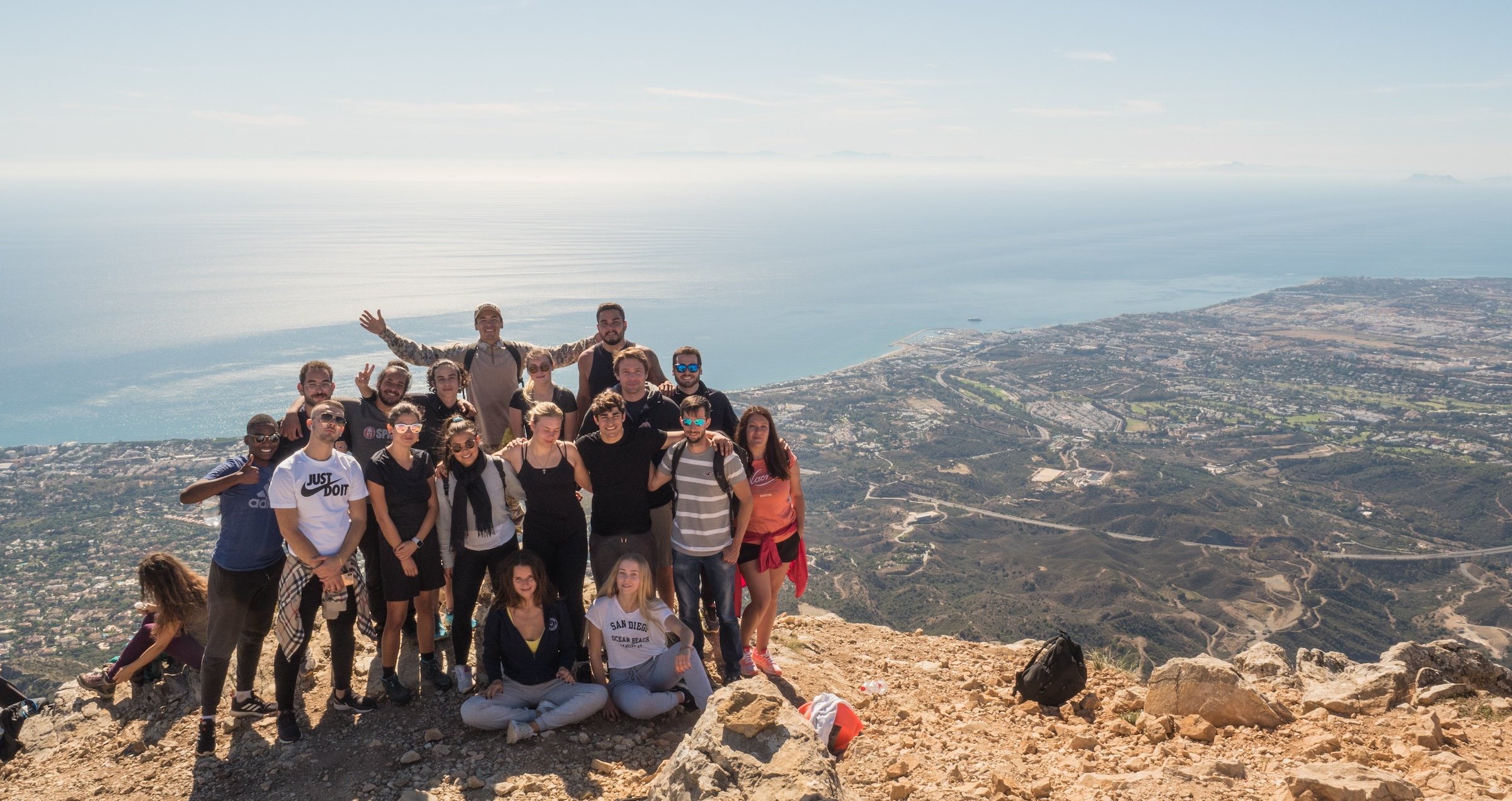
When your semester ends, you’ll carry home a new way of seeing.
Sure, you’ll speak new languages. You’ll have your go-to café, shortcuts through cities that used to scare you, and a playlist full of songs from people you’ll probably never meet again.
But what really changes is harder to describe.
You’ll start noticing the world differently, a little more patient, a little more open.
You’ll catch yourself comparing how things are done back home, realizing that “right” and “wrong” often depend on the map you’re standing on. Your curiosity will get louder, your confidence steadier.
Europe does that to you. It stretches your comfort zone until it stops feeling like one.
It teaches you that borders are only real if you believe in them: academic, personal, or otherwise.
That growth doesn’t happen in safety; it happens in motion.
And if reading this makes you feel that familiar pull, that urge to go, to see, to test yourself, then maybe it’s time. Find the place that calls you, reach out, ask questions, take that first small step.
That’s all it ever starts with, one step.
Every year, well over a million students cross borders to study in Europe, many as free movers, outside traditional exchange programs.
A quiet revolution of independence that keeps growing with every semester.
Because every free mover story begins the same way: someone who decided to stop dreaming about change and go live it.
If that sounds like you, don’t let the moment pass, explore our University Finder, discover your destination, and start your story today. 🌍